





Ori Lavi-Peleg: How do you see the financial system in Israel? Does it provide Israeli citizens with the optimal response they deserve?
Cohen: The financial system in Israel, one of the important things about it is that it is a system that encourages savings and is designed to ensure that everyone in Israel can grow old with dignity. And I am pleased that in previous roles, even before I was appointed minister, as a Member of Knesset, I acted to advance the mandatory pension law for self-employed individuals as well, because we all want to ensure that people in Israel can grow old with dignity and not rely solely on an old-age pension. Therefore, the savings system in Israel is definitely an advanced system and especially important against the backdrop of rising life expectancy. The second thing that definitely requires correction is the banking system, which is centralized, less competitive. We all see the banks’ profitability, which in my eyes – and I came from the free market – is characterized by abnormal profitability. In recent years, while citizens received zero interest on their credit balances, the banks charged very high interest rates in each of the sectors. Therefore, action must be taken to promote competitiveness in the banking system, and insurance companies must also be encouraged to be more involved as part of the mix to increase competition in the banking system.
Lavi-Peleg: How can insurance companies compete with the banks?
Cohen: This can be expressed also in the long-term credit realms such as mortgages, and I think also in the short-term credit realms. We see the high interest rates and high fees on credit cards, and here too insurance companies can definitely offer solutions in a manner that will significantly reduce costs.
Tal Hafling: First of all, I welcome these remarks, happy to hear them, certainly from the perspective of a saving and working public. We indeed see this trend, which was advanced just moments before the Knesset was dissolved, to grant institutional bodies the right to manage small banks in order to generate competition in the banking segment. Along with all the reforms of licenses for non-bank credit companies, the strengthening of insurance companies. I walk around a lot in the market and hear that it is very difficult, certainly for a new player, to enter the market and generate competition. Not in small part due to the regulation itself. Do you think there is a heavy dependence between competition and regulation? Is our regulation in the right place?
Cohen: The Bank of Israel has stability before its eyes and neglects the issue of competition. The Bank of Israel is the largest lobbyist of the banks in the State of Israel, and in the actions it takes, it effectively constitutes a barrier to the entry of new competitors in a manner that would increase competition. One of the criteria for selecting the Governor of the Bank of Israel to replace the current Governor will be according to who will want to promote competition in the banking system, while lowering barriers. The banking system has a direct impact on the lives of all of us. How much overdraft we pay, what the cost of the mortgage is, the ability to obtain credit in order to open businesses. Thus the bank also affects economic growth and job creation. Therefore, action must definitely be taken to significantly encourage competition in the banking system. This will contribute to growth in the country and to the welfare of the residents.
Hafling: I want to focus on the savings and investments segment. After all, most of the public has an overdraft hanging over their heads at the bank, and a mortgage, and in the other hand they have a pension and perhaps a few Shekels available in an investment and trading account. Where do we stand in your eyes regarding competition in the investment world, with an emphasis on pensions? Cohen: We do not want people to take loans against savings and then, when they reach retirement age, receive their retirement funds and have to pay off the loan. What do we want? When a person purchases an apartment, which is an asset, then they can definitely receive a loan from the insurance company under terms much more favorable than the bank because they have long-term savings. Another point: when you receive a credit card, usually the credit card limit is 10, 20, 30 thousand Shekels. That is, a relatively not high revolving limit every month. Therefore, here too, it is right that insurance companies take part in credit realms.
Lavi-Peleg: You spoke about the Bank of Israel as a lobbyist, the largest lobbyist of the banks. Do you see the same phenomenon also in the regulation of insurance companies and investment houses – the Capital Market Authority?
Cohen: I think concentration in the capital market is lower, and the ability to transfer is higher. There is entry of new competitors. In the past fifty years, only one bank was established in Israel – One Zero. Other than it, no one received a new banking license, and that speaks for itself.
Hafling: Do you think a change should be made to the structure of the regulators themselves? Perhaps increase the power of someone, perhaps decrease the power of someone?
Cohen: We need a market that will work to achieve both goals together. Stability alongside competition. Choosing only one of them harms the citizens.
Hafling: Unfortunately, for three or four years now, we have had a growing and widespread phenomenon of pension-related crime. Crime organizations, or simply very aggressive opportunists, realized that most of us have pension savings in one of the institutional bodies. We saw this initially in painful affairs such as the Slice affair, and we are seeing it with another similar company now. We are also witnessing the pension sting, where elderly individuals, and not only the elderly, are persuaded to withdraw their pension in exchange for a fee, even though they could have done it on their own, and all this with a 35% tax payment. Sometimes it reaches the point of actual full theft, when the saver signs forms to withdraw pension funds and at the last moment the money actually goes directly to the criminals. The pension market is under-protected. How do you think such a phenomenon should be addressed?
Cohen: That is precisely the role of the Commissioner of the Capital Market and Insurance. To inspect the players, the companies, and of course alongside very incisive enforcement and very strict punishment. The reason we have dedicated supervisors both in the capital market and in the banking market is against the backdrop of the very dramatic impact of cases of harm, as you noted. Therefore, enforcement and punishment must be ensured all the more vigorously.
Lavi-Peleg: You mentioned incisive enforcement and strict punishment. We are already three years after the explosion of the Slice affair. Do you think enforcement and punishment are taking place there? Are we in the right direction to bring to justice those who caused the severe incident of the collapse of an investment house of such size?
Cohen: When we see the results and the court’s decision, we will be able to address whether there was sufficient punishment or not. At the end of the day, people work most of their lives to ensure they can grow old with dignity, and therefore we must be very firm in handling severe phenomena as described.
Hafling: Let’s talk about the mountain of money. 3.3 trillion Shekels saved in the pension market and very active within the Israeli capital market. We are in difficult years with a complex deficit, a decline in growth, and macroeconomic data that are not so pleasant for the country, among other things as a result of the heavy war that fell upon us. Do you think there should be more symbiosis between those long-term savings funds and the building of the country?
Cohen: The macroeconomic data are among the best there are. Both relative to ourselves and relative to the world. The inflation rate is within target, growth after the war is impressive, the Israeli currency has strengthened, the stock market has risen – I assess that there is a positive future and horizon for the State of Israel – we will be able to create jobs, and quality jobs. Investment decisions must be such that serve the saver in a way that maximizes return. Regulation that intervenes will harm returns. Therefore, one should not intervene in the manner of investment management.
Hafling: We learned that with the enormous investment portfolio that has been created, pension savers move the needle of the local economy. Should there also be a consideration in investment management regarding the macro impact on the Israeli economy?
Cohen: There must be a separation of authorities. This is a free market, and that is how a free economy behaves. Any restriction will only harm market efficiency.
Lavi-Peleg: We spoke about many components of the capital market, savings, and finance in Israel, and we have not yet touched on intermediaries. Regarding insurance agents and the growing public discussion regarding their business model, we would be pleased to hear your stance: Are they intermediaries who work solely for the benefit of the client, or does the business model in which they operate create a conflict of interest that needs to be fixed?
Cohen: I know the capital market inside and out. I managed companies, and I am a CPA, and I also use the services of an insurance agent. He knows the data, knows the companies, and I recommend using the services of an insurance agent.
Lavi-Peleg: Among activists, I hear your name as the Likud candidate for Minister of Finance. Among the topics raised in the conversation – what are the first ones you will act to promote if you are elected to this position?
Cohen: Increasing competition in the banking system. The role of the Minister of Finance is not the role of a treasurer. He is there to generate growth engines that will expand the economy, and create quality jobs.
What will the 26th Knesset look like?
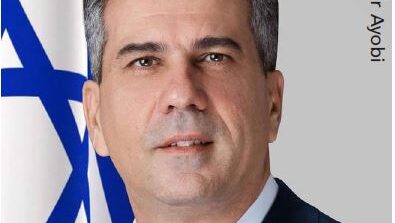
The interview with Minister of Energy Eli Cohen (Likud) takes place as part of a series of interviews conducted by Ori Lavi-Peleg and Adv. Tal Hafling with candidates in the Knesset elections, with the aim of raising economic and financial issues, and of course – the positions of candidates for the next Knesset. Additional interviews in the series:
“In the Knesset, not enough is being done to promote competition in the financial system”: MK Vladimir Beliak on the financial market
“The agent must be the representative of his client. I want him to profit when the client profits”: MK Oded Forer on financial regulation


